
Giving Feedback About Assistive Listening Systems
Below are three steps to help you, as a consumer, begin to give feedback about your experience (good, bad, confusing, etc.) to facilities, agencies, or submitting complaints. Choose what’s most useful for your situation.
1. Inquire
(optional) You are not required to inquire prior to your arrival. Assistive listening systems ‘should’ be in place, with no need to request because they are usually permanently installed in a room. However, some institutions may require about 2 days notification.
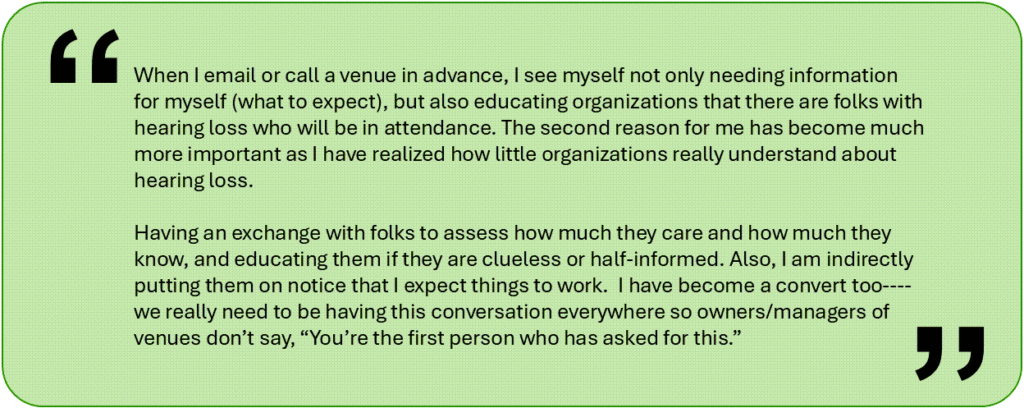
Please note that inquiring can help to ensure you have access to clear audio. It is best to write a simple inquiry:
“I have hearing loss and require an assistive listening system to participate. Please tell me what your system is and where am I to pick up any additional equipment needed to access the system?”
Resources
- Inquiries. Templates for you to adapt for your preparations (20+ ideas)
2. Use assistive listening systems
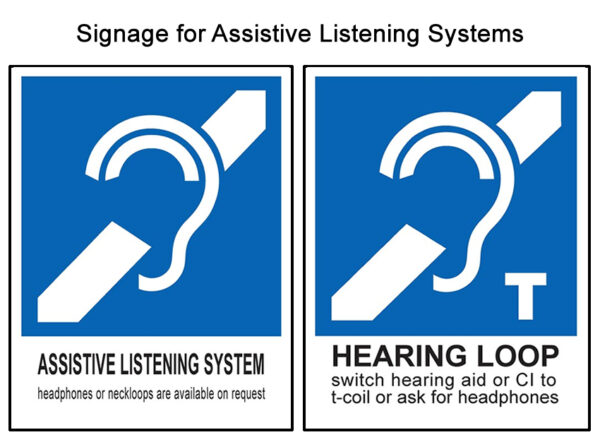
Use assistive listening systems wherever you go. This effort on your part shows the facility managers the importance of having the equipment (people need it) and making sure it is functioning correctly.
- See “How to Use Assistive Listening” (webpage with 3 steps)
3. Write Something (Feedback and Complaints)
(optional) Speaking Up. After your event, service, or meeting, give feedback. What worked? What didn’t work? How did the staff assist you?
For documentation and education, it is preferable to write your comments in an email, an online form, a complaint form*, or Google Review” rather than delivering them verbally.
a. What happened
- Be sure to thank them for having a system that is working well that helps you hear better.
- If you didn’t have good, clear audio, describe what you experienced.
- If not present, explain what this means for you that you will not to be able to hear and understand. Provide feedback about the ADA obligations based on what kind of venue it is (you can attach the one-page ADA handout that is below)
- Templates that you can adapt
b. What you’d like to continue (positive) or see changed (improvements). Encourage them to solve the problem.
- Complaints and Feedback. Snippets for you to adapt if things didn’t work well (webpage)
- Template for initial complaint when denied hearing access (.docx, 1 page) [also below]
- Local, state and federal options for submitting complaints*
c.(Optional) Add attachments to save time and make it easier to explain the technical topics (see below).
*consult the agency’s webpage to determine any procedures and deadlines.