
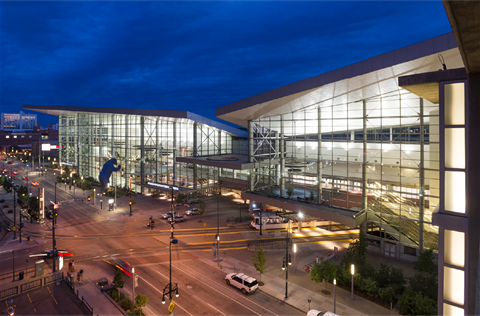
Colorado Convention Center in Denver
About the Lawsuit
Co-plaintiffs Colorado Cross-Disability Coalition and Dr. Linda Forrest of Oregon filed a civil rights discrimination lawsuit in federal district court in Colorado under the Americans with Disabilities Act (ADA) against the City and County of Denver and other related entities as owner and operators of the Colorado Convention Center (CCC), and the American Psychological Association (APA) for the failure to provide assistive listening systems for sessions during the APA’s August 2025 annual convention held at the Colorado Convention Center.
- Case No. 1:26-cv-03311 (41 pages)
- Media Release July 28, 2026. Please email the Center for Hearing Access for a Word version
What Can You Do to Support This Lawsuit?
Whatever the outcome, this single lawsuit will help towards gaining improved and universal hearing access for more recipients who may not understand their hearing rights under the ADA.
But one lawsuit is not enough. Each of us can take action within our own communities to improve hearing accessibility in theaters, places of worship, performance halls, and other public venues. Go with a friend, family member, or another advocate — advocacy is a team sport. Your efforts will help both yourself and many others.
Bring hearing loss, and the right to hear, to light:
1. Showing Up. Use assistive listening systems wherever you go. This effort on your part shows the facility managers the importance of having the equipment (people need it) and making sure it is functioning correctly.
- You are not required* to inquire prior to your arrival. However, inquiring can help to ensure you have access to clear audio. A simple script:
“I have hearing loss and require an assistive listening system to participate. Please tell me what your system is and where am I to pick up any additional equipment needed to access the system?”
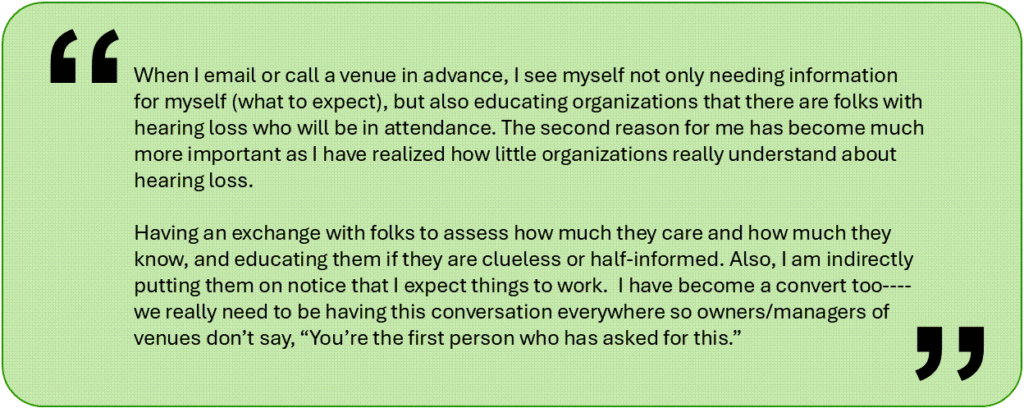
2. Speaking Up. After your event, service, or meeting, give feedback. What worked? What didn’t work? How did the staff assist you?
- If you didn’t have good, clear audio, let staff at the facility know and then follow up to encourage them to solve the problem.
- If not present, explain what this means for you that you will not to be able to hear and understand. Provide feedback about the ADA obligations based on what kind of venue it is (you can attach the one-page ADA handout that is below)
- And, be sure to thank them for having a system that is working well that helps you hear better.
- Templates that you can adapt
*consult the facility’s webpage to determine any procedures and deadlines. As a rule of thumb, a deadline for requesting an assistive listening system should be immediately or within 2 days. Assistive listening systems are usually permanently installed in a room.
Consumer Resources
Surveys
- Audiologists who may not be fully providing access to assistive listening, via the telecoil component in hearing aids
- Consumers with challenges finding and using assistive listening, and
- Oregon Facilities with a lack of assistive listening systems (which is out of ADA compliance). To varying degrees, all states across the country have a lack of well-maintained assistive listening systems and trained staff.