Getting Started-Hearing Better in Public Places, Part 1

Get clarity! Bring the sound from the microphone directly to your ear, with minimal background noise. Assistive listening systems extend the capabilities of your hearing aid or cochlear implant. Listen to the difference assistive listening can make (1-minute videos)

Below are instructions on how to use hearing loops, FM/RF, and infrared systems. A second section has instructions about leaving a Google Review about your experience.

How to use assistive listening systems. This webpage, consolidated into printable document (1 page, pdf)

How to Connect-Hearing Loops

Hearing loops are most loved and most used by people with hearing loss. Just click a button on their hearing aids or cochlear implants and connect. No equipment to pick up.  For those without hearing aids, borrow headphones and a receiver.

We believe that hearing loops are today’s gold standard for providing easy-to-use, universal hearing access.

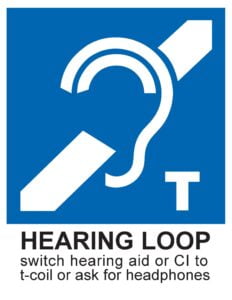
Blue sign. At top: International Symbol of Access for Hearing Loss. Bottom, black on white background "switch hearing aid or CI to t-coil or ask for headphones"
Hearing loop signage has a "T" in the lower right corner. Commonly these signs are blue. To use this system with a telecoil, you don't need to borrow any equipment (easy!)
Using a hearing loop. Left side: Diagram showing the telecoil inside a hearing aid. Right side: A hearing loop receiver, a box about 3x5 inches and headphones plugged in.

How to Use a Counter Hearing Loop

  1. Stand within 2-3 feet of the counter hearing loop.
  2. Switch your hearing aid or cochlear implant to Telecoil (T-coil) program
  3. Speaker talks into microphone and sound is sent directly to your hearing aids or cochlear implant
  4. Anyone outside of the approximate 4-foot area cannot pick up your conversation to ensure privacy.

Photos of permanent and portable counter hearing loops (this website)

How hearing loop works-describing the invisible (1 page, pdf)

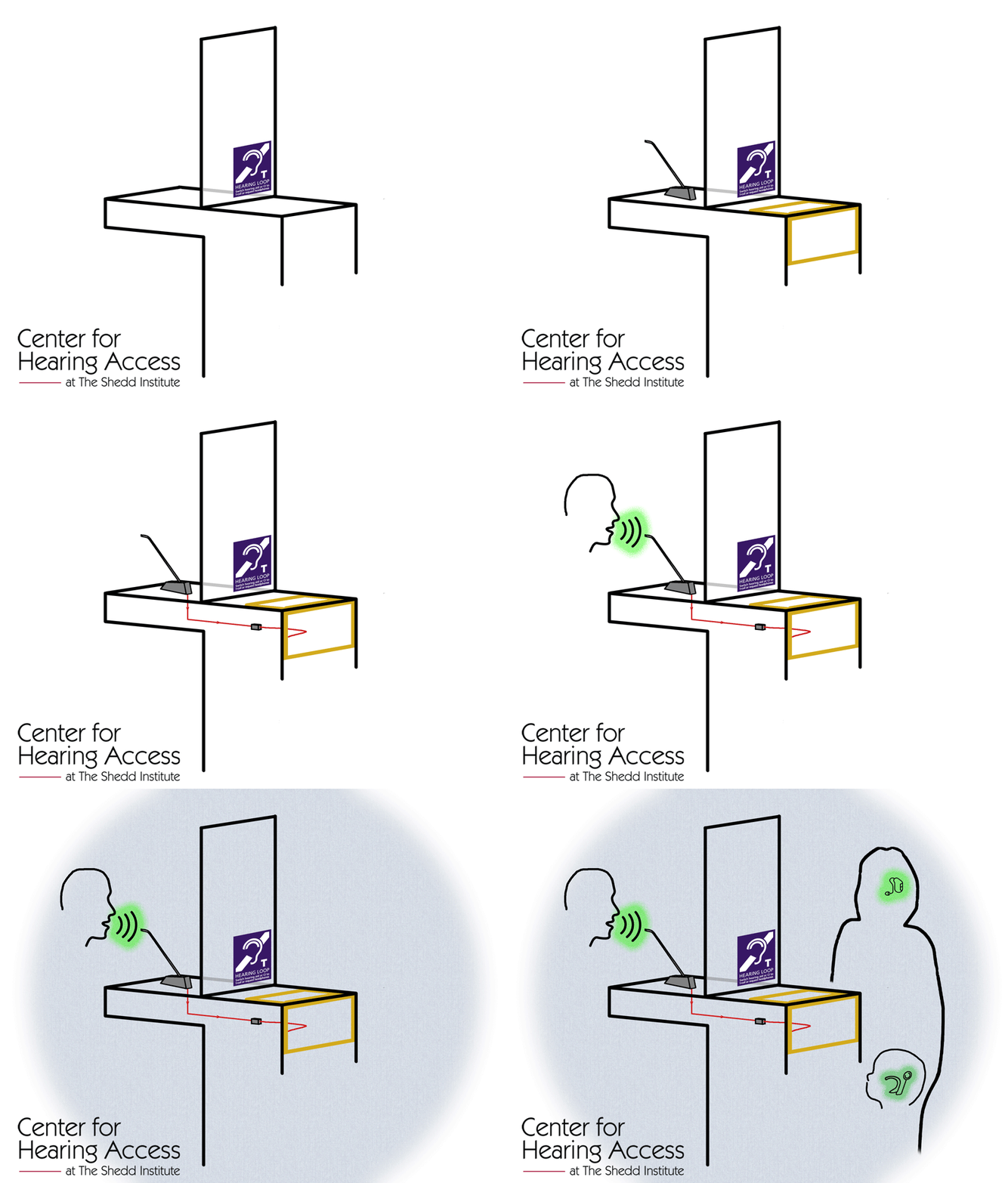
animated image of how a permanently installed counter hearing loop works, One component at a time is added
Permanent Counter Hearing Loop
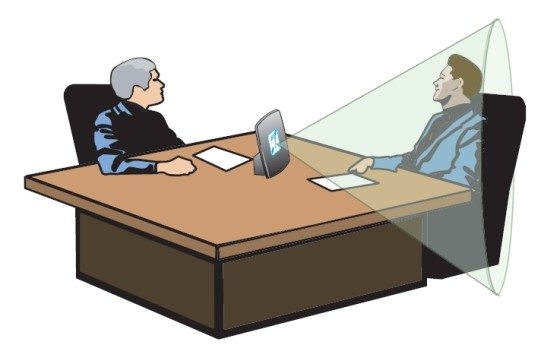
Portable counter hearing loops between two people sitting at a desk.
Portable Counter Hearing Loop

How to Connect-FM/RF and Infrared (IR)

These systems are similar to the hearing loop, but use different technologies.

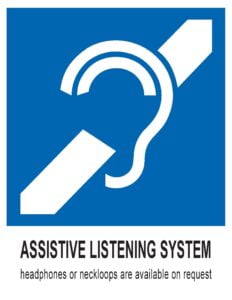
Blue sign. At top: International Symbol of Access for Hearing Loss. Bottom, black lettering on white background "Assistive Listening System: headphones or neckloops are available upon request"
FM and infrared systems will use a similar sign, but without the "T." To use this system with a telecoil, you will need to borrow a receiver and neckloop from the site/facility.
Images Left: Receiver + neckloop + Right Receiver + neckloop + earbuds + earhook

Where Can You Find Assistive Listening Systems?

Assistive listening systems (hearing loops, FM, and infrared) are required 1) wherever a PA system is used in a public place and 2) places that you have difficulty hearing. There are hundreds of places in your state, including libraries, auditoriums, event spaces, city council chambers, courtrooms, etc. that have these systems. Here’s a list of the type of places (this website) you can expect to find and use them.

  • United States and Canada hearing loop lists, listed by state or providence (this website).
  • Over 30 countries have assistive listening systems so you can hear clearly when you travel, including on trains and portable systems on tours.

Leave a Google Review

How did the hearing loop, FM, or infrared system work?  Consider taking a photo of the ‘ear’ and leaving a positive or constructive review. Google Review examples and resources (this website).

International Symbol of Access for Hearing Loss. A white ear with a slash through it. Blue background.    Google Maps logo

For More Information on Assistive Listening Systems

About the Center for Hearing Access. Founded in 2024, the nonprofit Center for Hearing Access is a national advocacy and education initiative of The John G. Shedd Institute. We champion and educate users, facility staff, hearing instrument specialists, and audiologists about all ADA-compliant assistive listening systems and other strategies to increase access to theaters, libraries, conferences, government offices, healthcare facilities, courtrooms, places of worship, and other public and private spaces. Effective hearing access can be life-changing for people with hearing loss to maintain community engagement.

We create and provide advocacy materials, ADA information, a speaker’s bureau, videos, articles, vendor lists, and templates for consumers and staff.

Introduction to assistive listening for consumers

QR Code for this webpage
tinyurl.com/ALS-Intro