Ethics Inquiry-Assistive Listening Systems
(13 pages) A document that raises questions and dilemmas, with stories to illustrate the challenges patients encounter across the country.
Ethics Inquiry-Assistive Listening Systems Read More »
(13 pages) A document that raises questions and dilemmas, with stories to illustrate the challenges patients encounter across the country.
Ethics Inquiry-Assistive Listening Systems Read More »
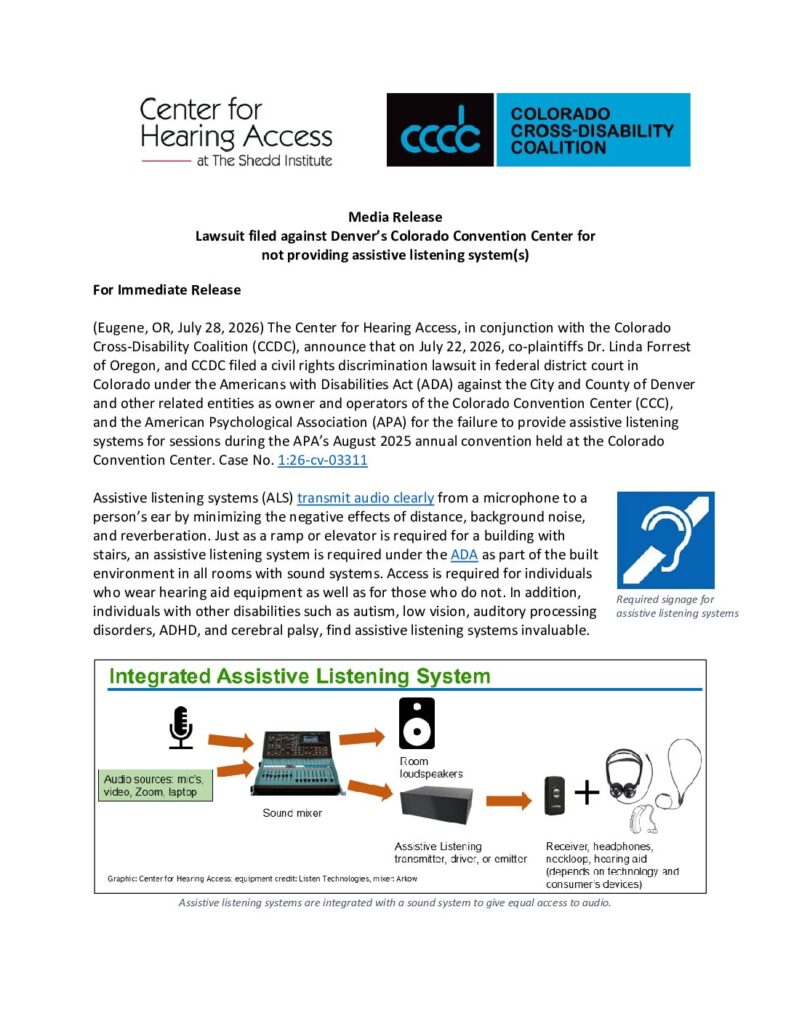
(3 pages) Co-plaintiffs Colorado Cross-Disability Coalition and Dr. Linda Forrest of Oregon filed a civil rights discrimination lawsuit in federal district court in Colorado under the Americans with Disabilities Act (ADA) against the City and County of Denver and other related entities as owner and operators of the Colorado Convention Center (CCC), and the American
Media Release-Lawsuit filed against Denver Convention Center for lack of Asst. Listening Read More »
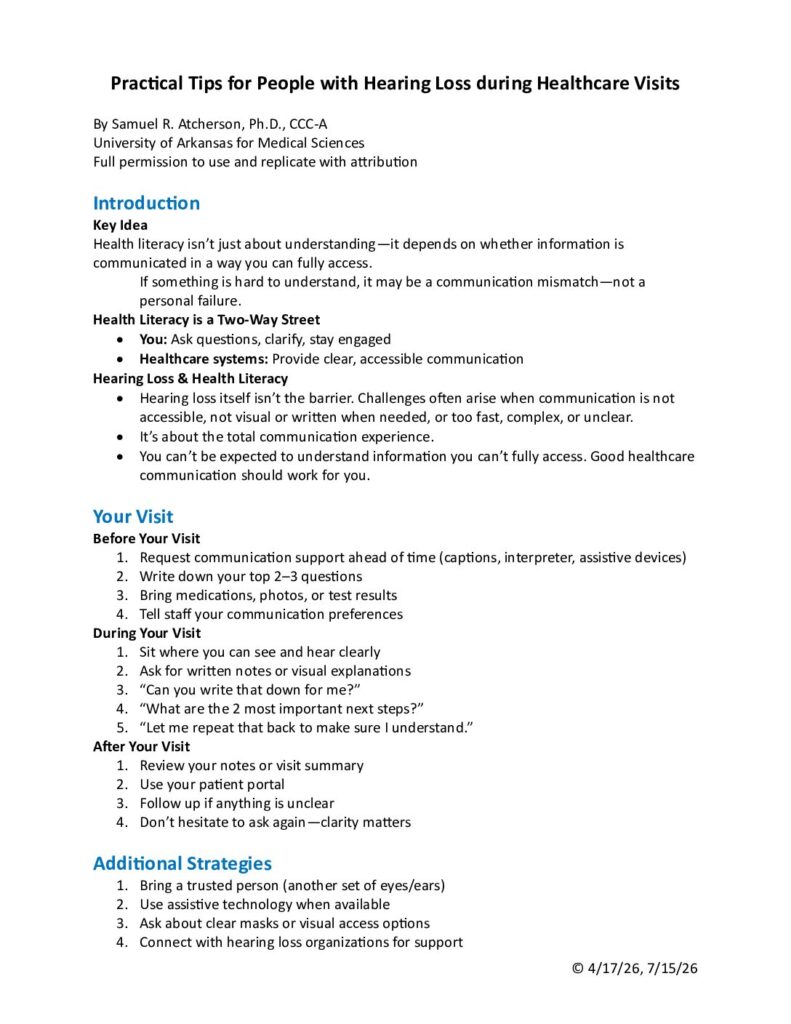
(1 page) Hearing loss itself isn’t the barrier. Challenges often arise when communication is not accessible, not visual or written when needed, or too fast, complex, or unclear. Health literacy isn’t just about understanding—it depends on whether information is communicated in a way you can fully access
Practical Tips for People with Hearing Loss during Healthcare Visits Read More »
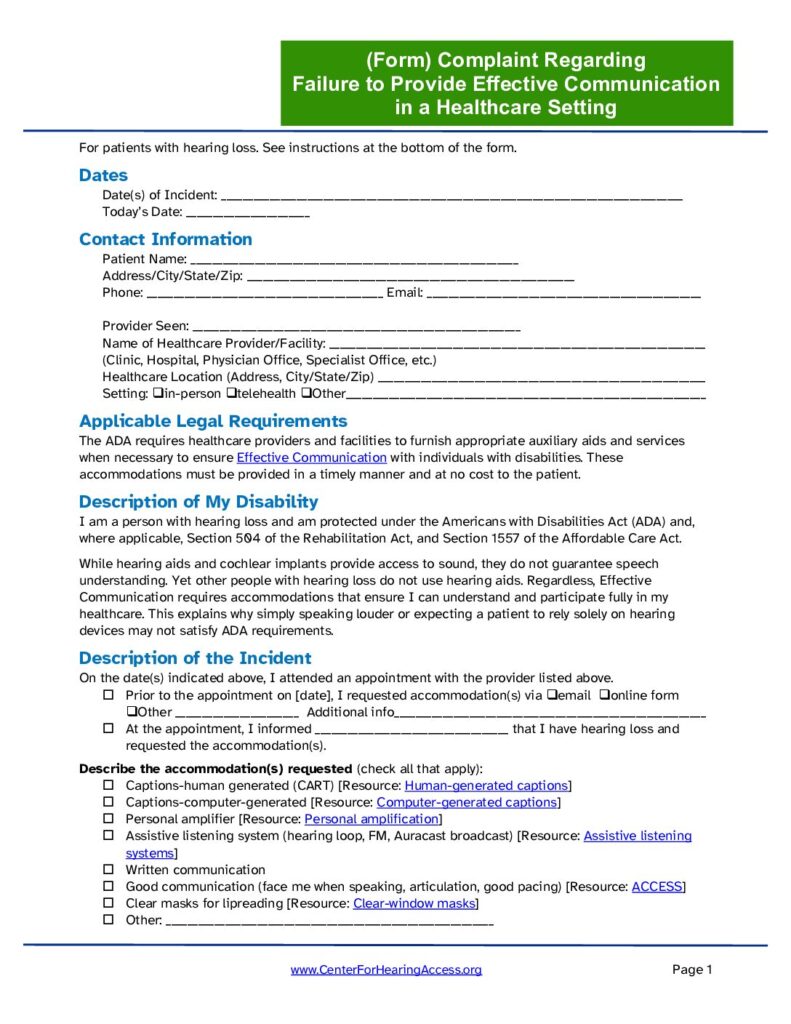
(1.5 pages) This fillable healthcare form makes it easier to submit a complaint to a healthcare provider by a patient with hearing loss. Complete (typed or handwritten), print or email to the appropriate department. Or if you wish to customize it, copy/paste it into your own letter.
Complaint Form (Healthcare), Regarding Failure to Provide Effective Communication Read More »
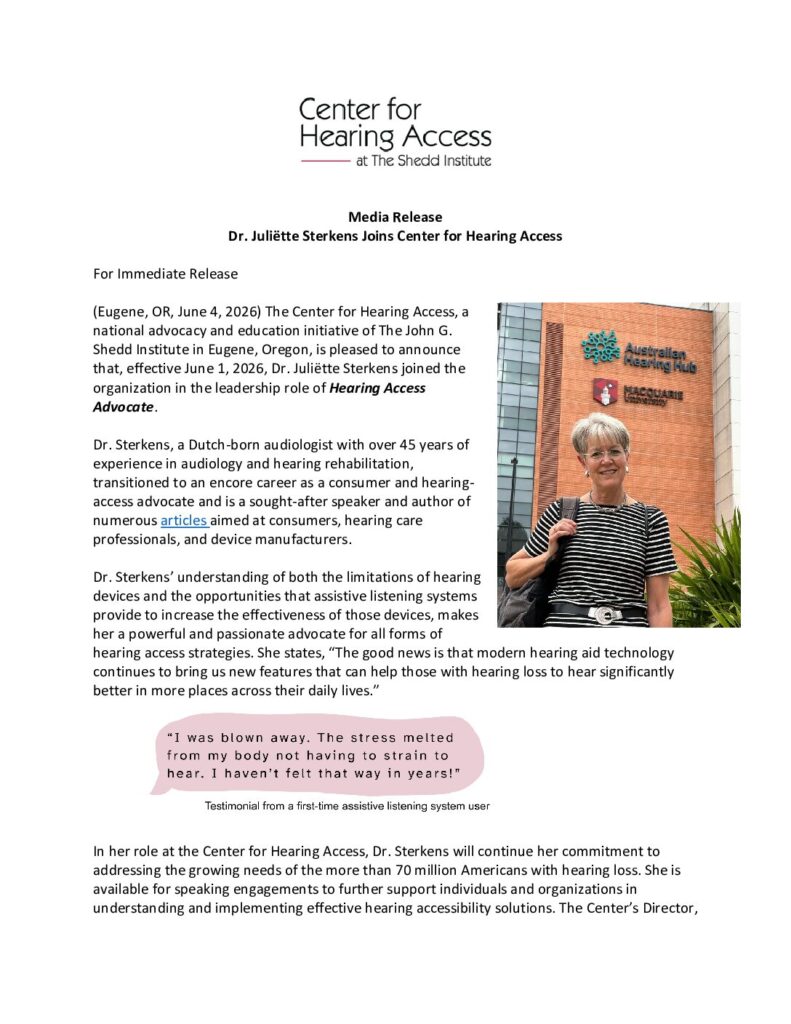
(Jun 4, 2026) The Center for Hearing Access, a national advocacy and education initiative of The John G. Shedd Institute in Eugene, Oregon, is pleased to announce that, effective June 1, 2026, Dr. Juliëtte Sterkens joined the organization in the leadership role of Hearing Access Advocate.
Dr. Juliëtte Sterkens Joins Center for Hearing Access Read More »
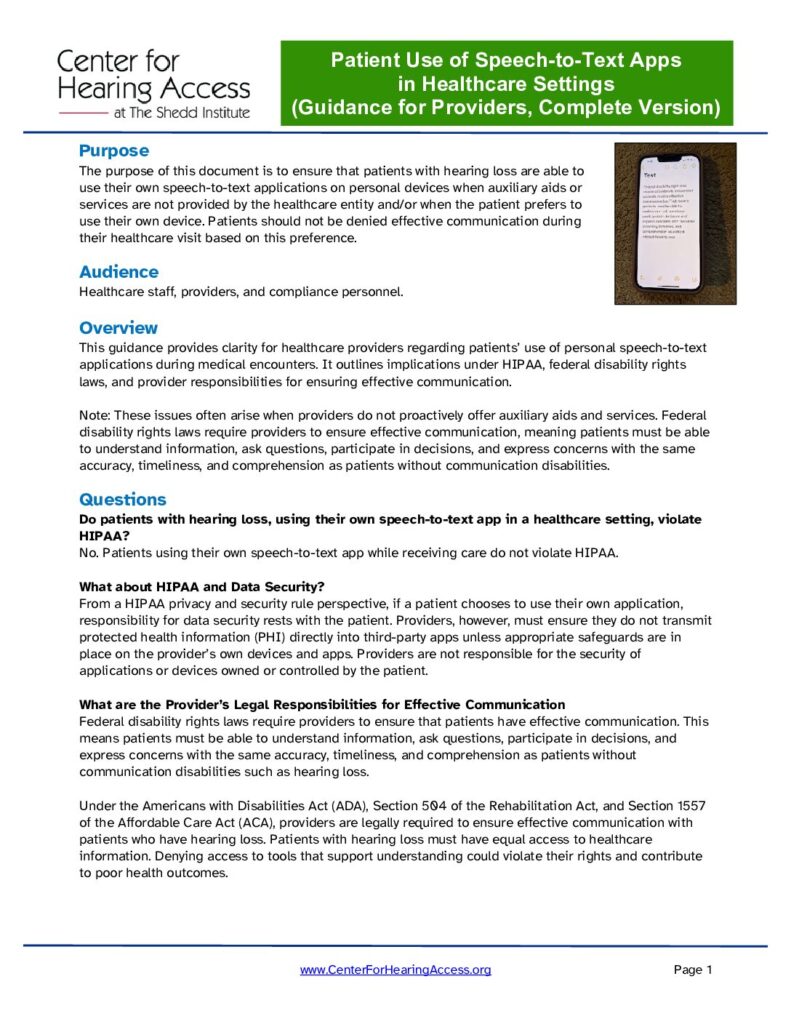
(3 pages) The purpose of this document is to ensure that patients with hearing loss are able to use their own speech-to-text applications on personal devices when auxiliary aids or services are not provided by the healthcare entity and/or when the patient prefers to use their own device. Patients should not be denied effective communication
Patient Use of Speech-to-Text Apps in Healthcare Settings (Complete Version) Read More »
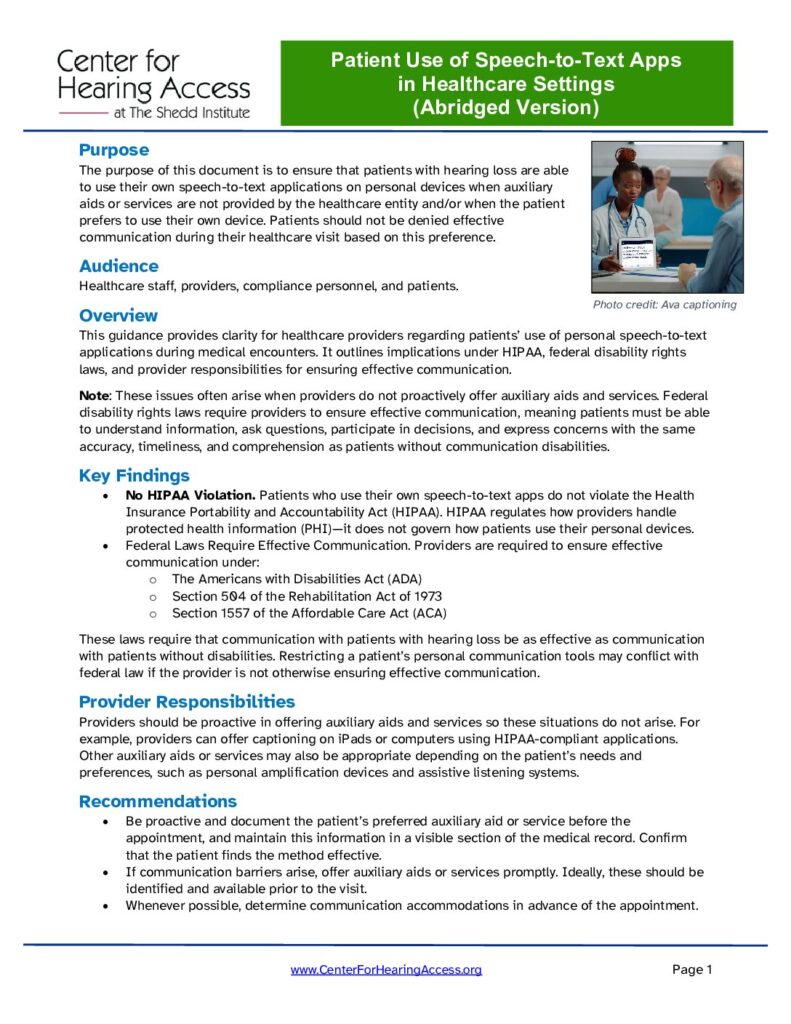
(2 pages) The purpose of this document is to ensure that patients with hearing loss are able to use their own speech-to-text applications on personal devices when auxiliary aids or services are not provided by the healthcare entity and/or when the patient prefers to use their own device. Patients should not be denied effective communication
Patient Use of Speech-to-Text Apps in Healthcare Settings (Abridged Version) Read More »
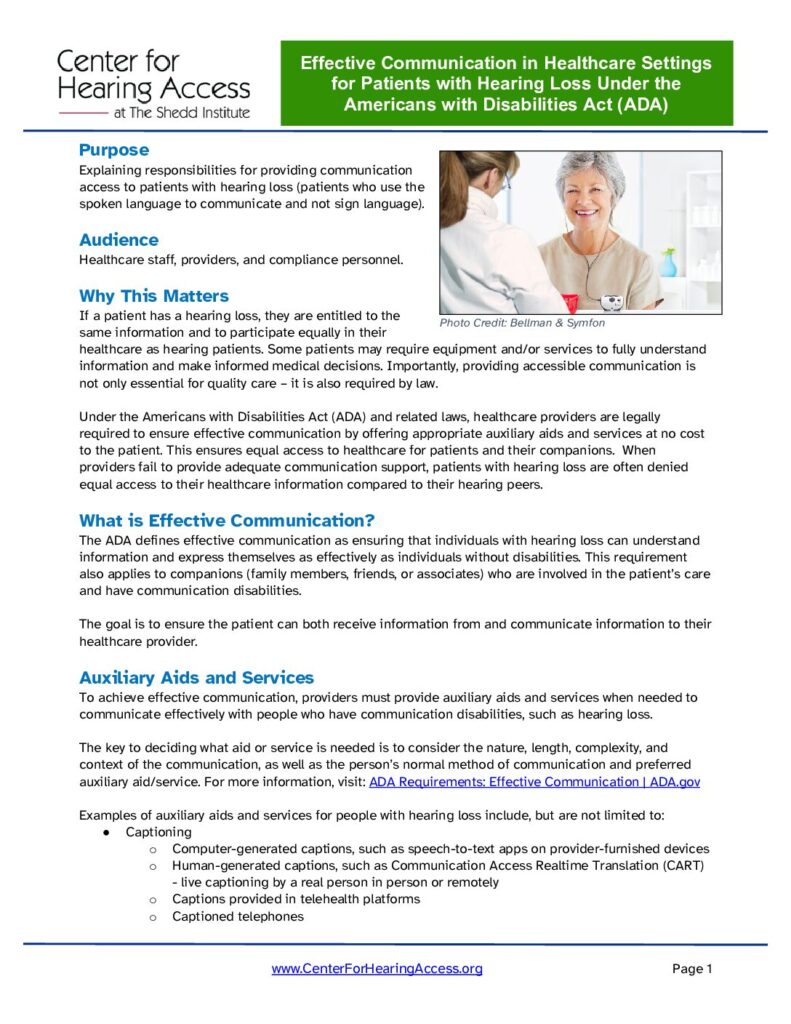
(3 pages) Explaining responsibilities for providing communication access to patients with hearing loss (patients who use the spoken language to communicate and not sign language).Audience: Healthcare staff, providers, and compliance personnel.
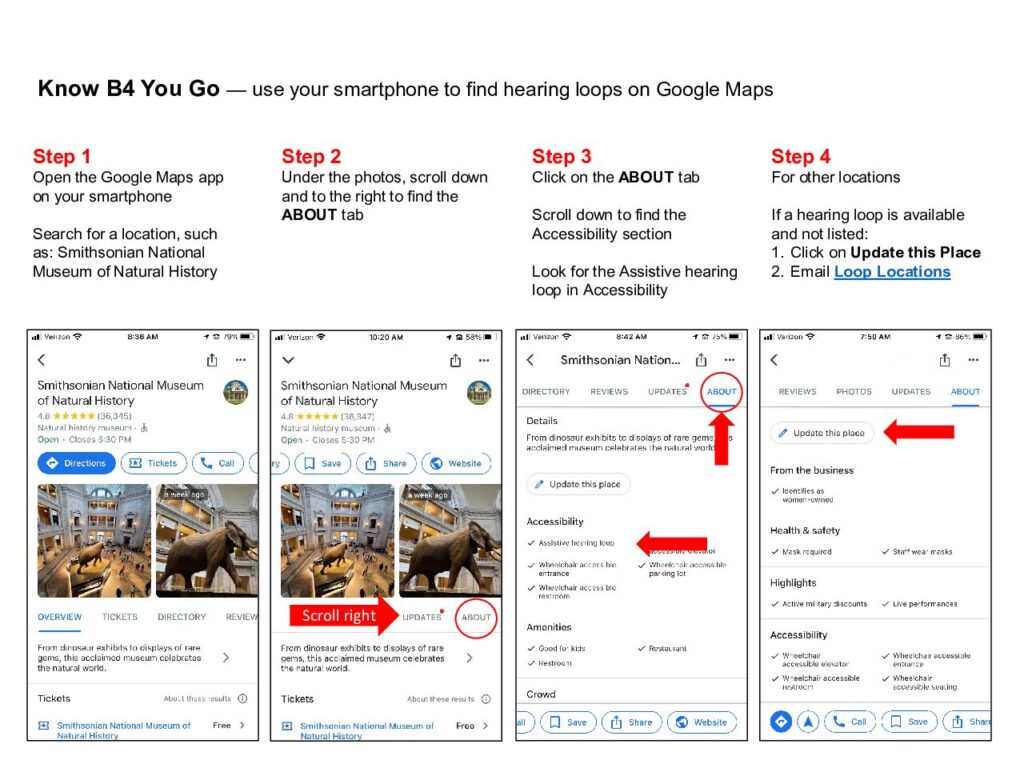
4 steps to find and optionally request an update hearing accessibility on Google Maps
Use Your Smartphone to Find Hearing Accessibility on Google Maps Read More »
(6 pages) Advocacy for Auracast (just like hearing loops) will set you apart as a provider. Read how an audiologist helped to bring attention to assistive listening in her community and beyond. You can do something similar. May/June 2014, Audiology Today. If all audiologists would foster one or two AURACAST installations, we could make this
Roadmap to a Auracast Community Read More »